Introduction
You searched for drawing makeup. Maybe you wanted to sketch a bold eye look, capture a fantasy design, or simply get better at drawing realistic faces.
What you’re about to discover is something different — and arguably more interesting.
There is a discipline that sits exactly at the intersection of makeup and drawing. It’s called face charting. And it has quietly become one of the most powerful ways to develop realistic drawing skills, visual thinking, and creative precision — all at once.
This is not a tutorial about how to sketch a face. This is about drawing with makeup — also known as makeup drawings, makeup designs, and face chart art — the way professional makeup designers do it, on paper, with real products.
What Is Drawing Makeup, Really?
Most people who search for “drawing makeup” are looking for one of two things: how to illustrate makeup looks digitally, or how to sketch faces with cosmetic details.
Face charting is neither — and both.

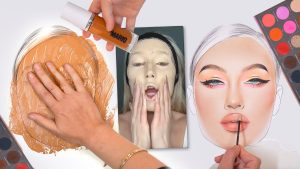
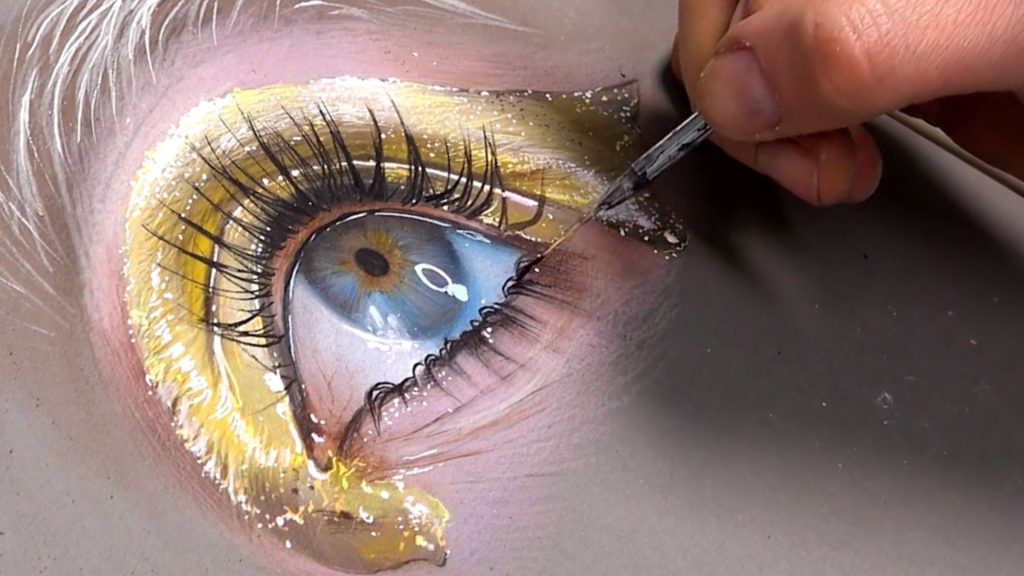
It starts with a printed outline of a face, called a facechart template. Then, instead of pencils or digital tools, you use actual makeup products — eyeshadow, eyeliner, blush, lipstick — applied directly onto the paper with brushes.
The result is something that looks like a painting, but is made entirely from makeup.
This technique was pioneered and developed into a professional discipline by me, Liza Kondrevich, a makeup designer from the Netherlands who created the world’s first comprehensive textbook on face chart art. What began as a professional planning tool for makeup artists has evolved into a sophisticated creative practice used by artists, educators, and beauty professionals worldwide.

Makeup Drawing Ideas — Where Creativity Begins
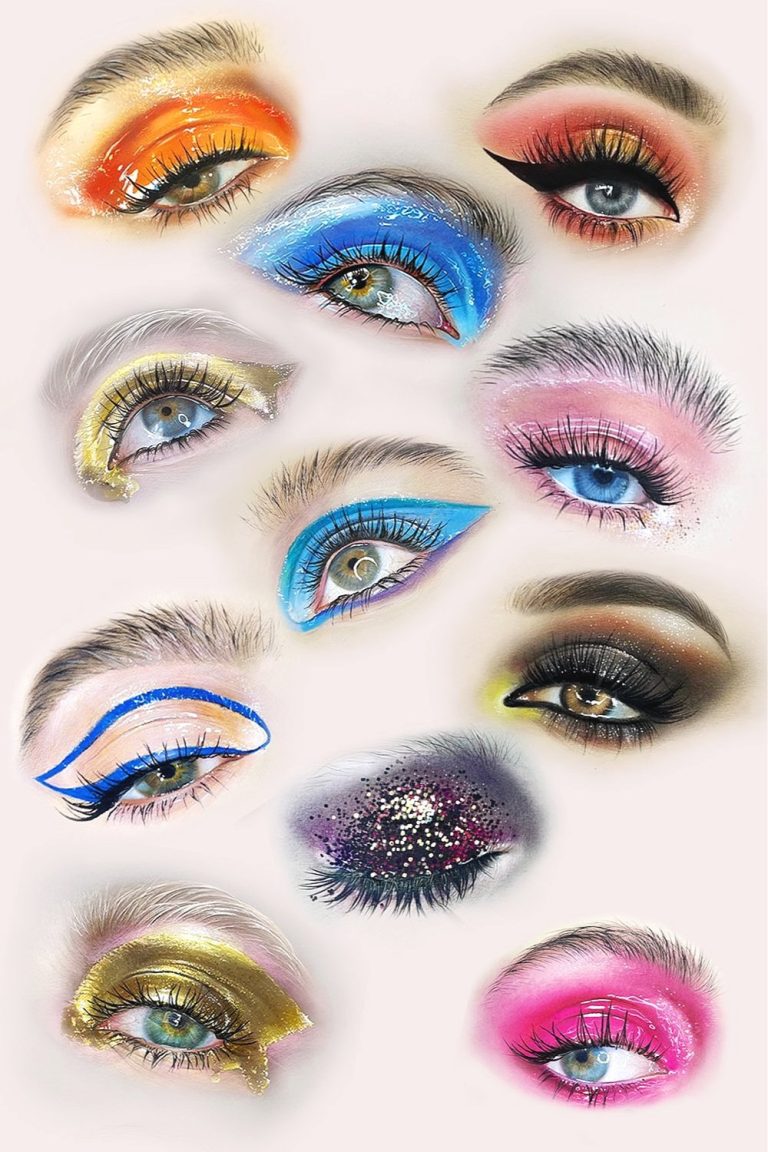
The range of what you can create with face chart art is genuinely surprising. From subtle everyday looks to bold editorial makeup designs, from clean minimalist concepts to wildly creative eyeshadow drawings that push color and texture to their limits.
This is where makeup drawing becomes more than practice. It becomes a creative outlet — a place to explore unique makeup looks without committing to a face, to experiment with eye makeup designs that would be too risky to try on a client, to develop a personal aesthetic through repetition and play.
Some artists use face charts to plan professional looks. Others use them purely as an art form — drawing with eyeshadow and pigment the way a painter uses oils. Most find it becomes both over time.
Whether you are looking for makeup drawing ideas to get started, or searching for eye makeup art that pushes boundaries, face charting gives you the structure to explore freely — without wasting product or time.

Why Drawing Makeup on Paper Makes You Better
Whether you come from an art background or a beauty background, face charting develops skills that are genuinely difficult to train any other way.
You learn to see light and shadow differently. Makeup is, at its core, the art of creating optical illusions on the face — adding depth where there is none, reshaping structure with color. When you apply this to paper, you develop an understanding of how light behaves on curved surfaces that transfers directly to realistic makeup drawing and illustration.
You train precision and control. Applying eyeshadow to a 2D face chart with a fine brush, building up layers of color, blending transitions — this trains the same fine motor skills and visual decision-making as traditional illustration, but with a different medium. It is one of the most effective ways to improve your eye makeup design skills.
You work within a structured system. Face charts come with correctly proportioned outlines. This removes the barrier of sketching and lets you focus entirely on color, texture, and detail — the elements that make realistic makeup art convincing.
You build a visual language. Every face chart you complete becomes a record of a decision — which colors work together, how shadow falls, what makes a look cohesive. Over time, this builds an intuitive visual vocabulary that influences everything you create — from concept makeup to finished client looks.

The Challenges — And How Face Charting Solves Them
If you have tried to draw realistic faces before, you know the frustration. Proportions that feel off. Eyes that don’t quite work. Skin that looks flat. These are not skill failures — they are the natural result of trying to solve too many problems at once.
Face charting separates those problems.
The outline is already correct. The proportions are done. You are not learning to sketch and shade and blend simultaneously. You are learning one thing at a time — which is how skills actually develop.
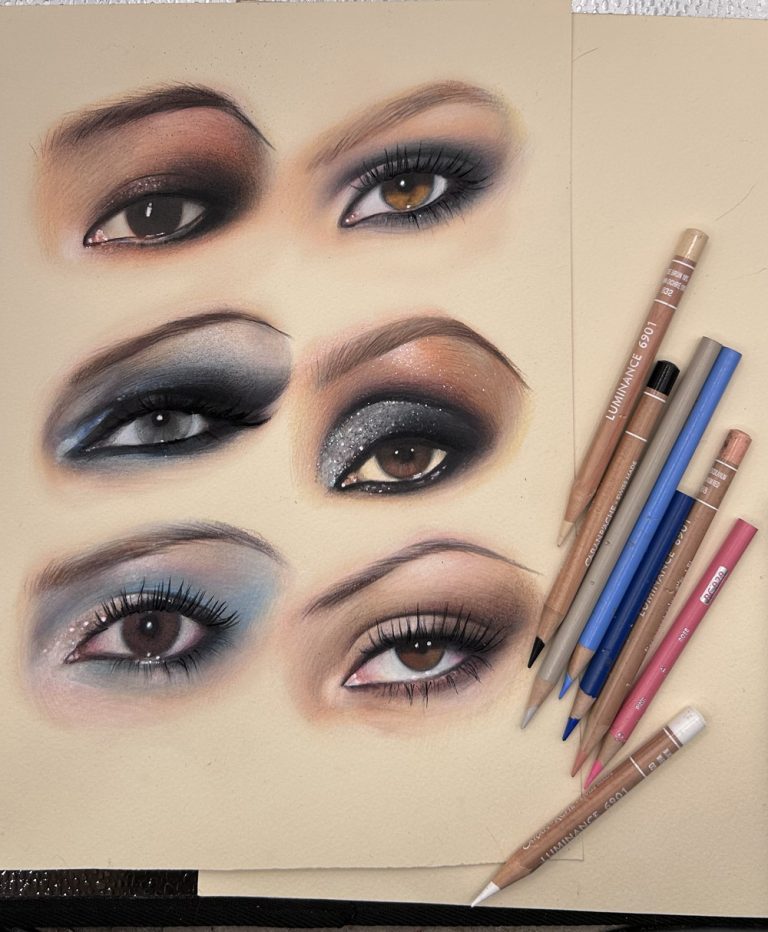
Eyes and lashes are where most artists struggle most. They require understanding how individual hairs grow, how the iris catches light, how the crease creates depth. Face charting forces you to study these details closely, repeatedly, until they become natural. This is the foundation of realistic eye makeup drawing.
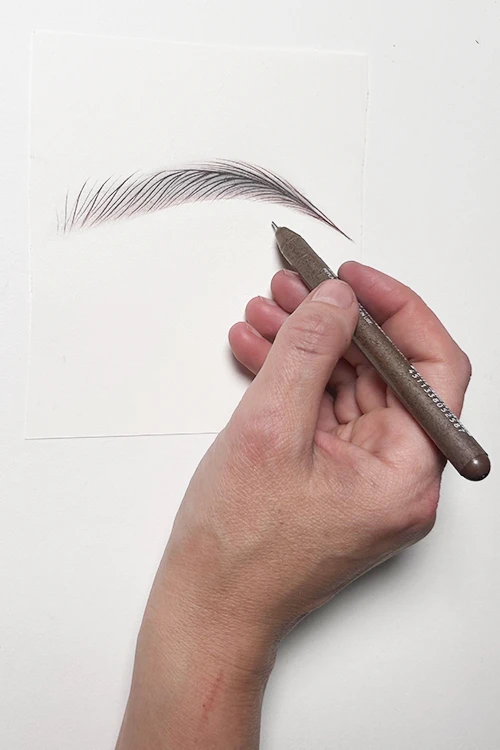
Brows are the feature most responsible for whether a face reads as real or illustrated. Their direction, weight, and spacing relative to the eye are subtle — but our brains notice immediately when something is wrong. Drawing brows on face charts builds the sensitivity to get this right.
Texture is the hardest thing to capture in any medium. Glitter. Foil. Matte skin. Glossy lips. Each requires a different approach. Drawing with eyeshadow, pigment, and other makeup products on paper gives you a low-stakes environment to experiment with all of them — building the skills that translate directly into makeup art drawing at a professional level.
Read more about how face charts work in our guide to face chart templates
Where to Start
If this resonates with you, the most direct path into face chart art is through the book that defined it.
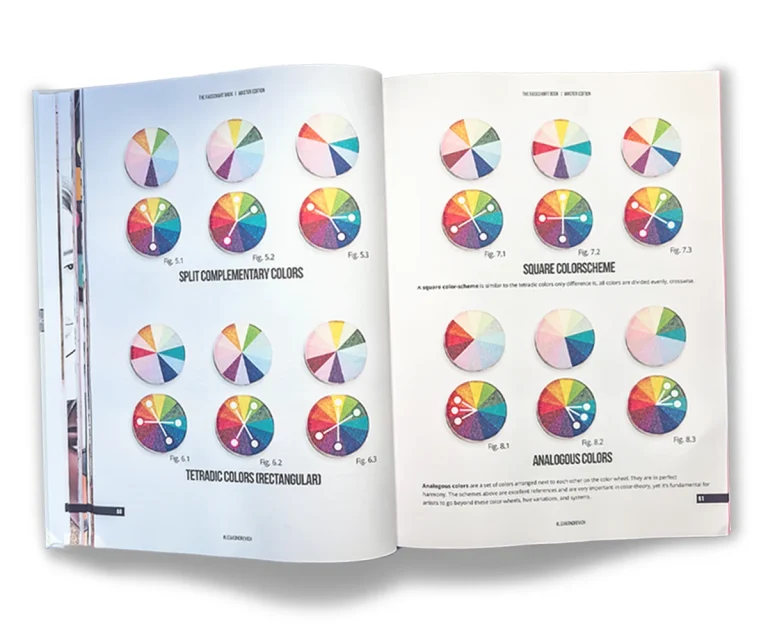
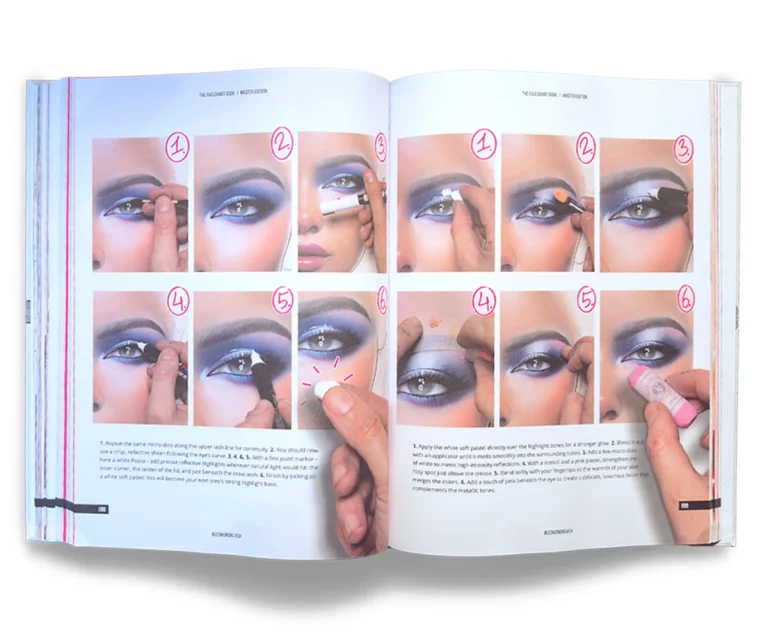
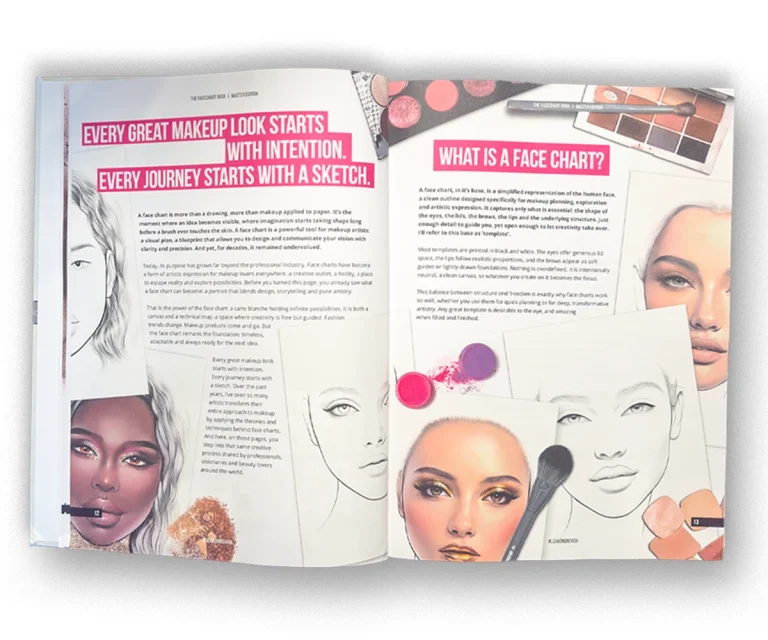
The Facechart Book — Master Edition is a 290-page professional textbook written and designed by Liza Kondrevich. It covers everything: the tools and materials, color theory specific to makeup, light and shadow principles, facial anatomy, and step-by-step technique for every feature — from subtle make up drawings to complex editorial makeup designs.
It is not a quick-start guide. It is a serious reference — the kind of book you return to as your skills develop, not one you put away after a weekend.
Used in makeup schools and by professional artists worldwide, it has been called the face chart bible by thousands of readers.

For Those Who Want to Go Further
The book gives you the foundation. If you want structured guidance — step-by-step lessons and a clear progression from fundamentals to advanced technique — the Makeup Designer Academy is the next step.
It is a complete online course taught by Liza Kondrevich, designed for artists who want to develop face chart artistry at a serious level. It covers everything from foundational principles to hyperrealistic makeup art drawing and design.
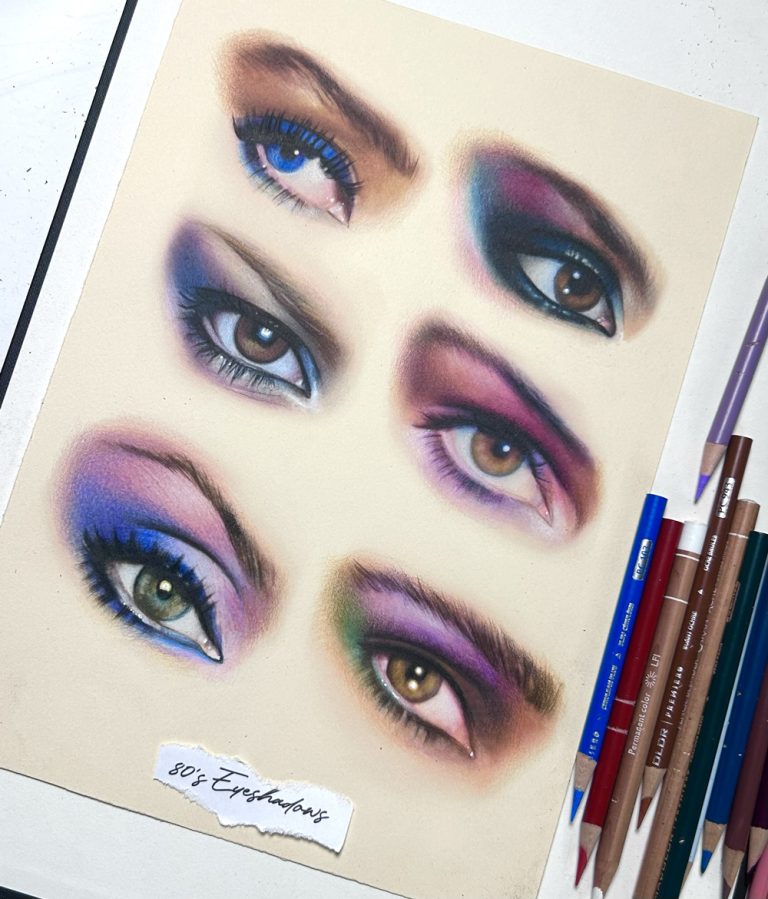
Drawing Makeup Is a Real Discipline
It has a history, a method, a community, and a body of work behind it.
If you are drawn to the intersection of art and beauty — if the idea of creating something precise, layered, and genuinely beautiful appeals to you — face charting is worth exploring seriously.
The art of makeup, expressed through drawing. Start with the book. See where it takes you.